Filled and Fooled: How Your Limit Orders Become Weapons Against You
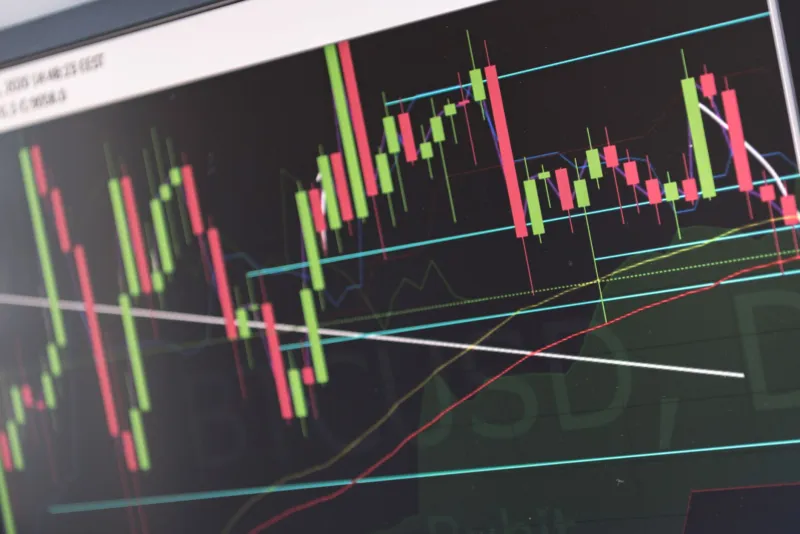
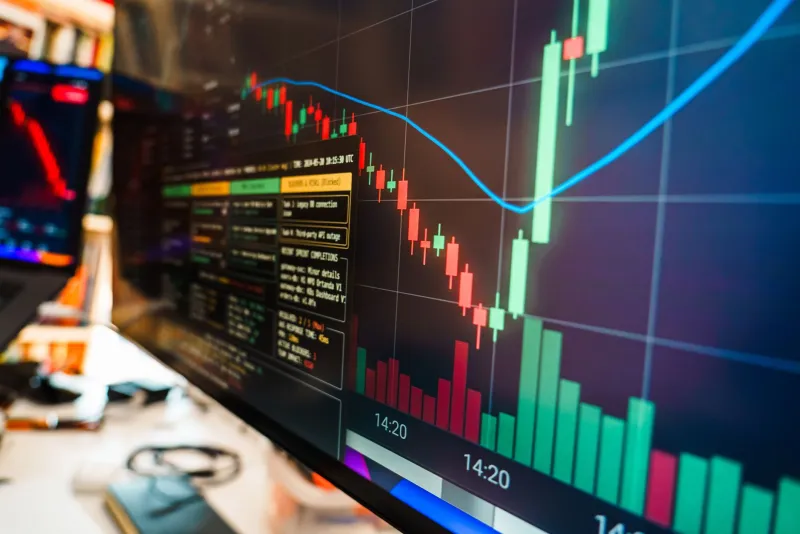
There is a particular kind of frustration that experienced traders recognize immediately: the limit order that sits untouched for an hour, then fills the instant the trade turns against you. It feels like bad luck. It is not bad luck. It is market structure doing precisely what it was designed to do.
Understanding why limit orders fill when they do — and, more importantly, why they fill when they shouldn't — is one of the more consequential lessons a retail trader can learn. The mechanics involved are not conspiratorial. They are simply the logical outcome of how liquidity, order routing, and market-maker economics interact at the microstructure level.
The Illusion of Protective Pricing
The appeal of the limit order is intuitive. Rather than accepting whatever price the market offers in the moment, you define your terms in advance. Buy at $48.50, not a penny more. Sell at $53.00, not a penny less. On the surface, this appears to be the behavior of a disciplined trader exercising rational control.
The problem is that limit orders are passive by definition. You are advertising your intentions to the market at a specific price level, and the market — specifically the participants who profit from facilitating your trade — now knows exactly where you are willing to transact. In liquid, highly efficient markets, this is largely inconsequential. In thinner markets, or during periods of compressed liquidity, your limit order becomes a piece of publicly visible information that sophisticated participants can and do act upon.
This is not a fringe concern. Payment for order flow, the practice by which retail brokers route customer orders to market makers in exchange for compensation, means that a significant portion of retail limit orders never reach a public exchange at all. They are internalized — filled by the market maker directly, at terms the market maker controls within the bounds of best execution rules. The market maker is not your adversary in any dramatic sense, but their interests are structurally opposed to yours: they profit from spread capture and order flow information, not from your trade working out.
Psychological Price Levels as Execution Traps
Retail traders cluster their limit orders at predictable locations. Round numbers. Prior support and resistance levels. Fibonacci retracements. Moving averages. These are the same levels that appear in every trading book, every YouTube tutorial, every free charting platform. The result is a significant concentration of resting orders at psychologically obvious prices.
Market makers and algorithmic traders are acutely aware of this clustering. When price approaches a heavily populated limit order level, there is an economic incentive to touch that level — to trigger the fills — and then reverse. The brief penetration of the level satisfies the technical condition required to execute the orders, but the follow-through that would validate the trade simply does not materialize.
This dynamic has a name in trading circles: the stop hunt, or more precisely, the liquidity sweep. Price moves just far enough to collect the resting orders at a predictable level, then retreats. Traders who placed limit buys at what they believed to be strong support find themselves holding a position that immediately moves against them, as the very act of filling their orders provided the liquidity needed for larger participants to execute the opposite side of their trade.
Selective Execution in Illiquid Conditions
The problem compounds in low-liquidity environments. Thinly traded stocks, off-hours sessions, and periods surrounding high-impact news releases all share a common characteristic: the bid-ask spread widens, market depth thins, and the cost of executing at any given price increases substantially.
In these conditions, the limit order's apparent protection becomes its greatest liability. A limit buy that sits just below market during a calm afternoon may behave perfectly reasonably. The same order, resting at the same price during a volatile pre-market session or in a stock with average daily volume measured in the hundreds of thousands rather than millions, is a fundamentally different instrument. The fill you receive may technically satisfy your price condition while representing a genuinely disadvantageous execution — because the conditions under which the order filled tell you something important about why no one else wanted to buy at that price.
When your limit order fills in a thin market, ask yourself a direct question: why was there a seller willing to meet my price right now? In many cases, the answer is that the informed side of the trade is on the other side of your order.
Structuring Orders Defensively
None of this argues against limit orders as a tool. It argues against using them naively, without accounting for the market structure dynamics that govern their execution.
Several adjustments can meaningfully reduce the degree to which your limit orders become liabilities.
Avoid clustering at obvious levels. If every retail trader in a given instrument is placing limit buys at the round number, placing yours slightly above or below that level separates your execution from the predictable mass. This is a small edge, but it is a real one.
Use limit orders to exit predictable behavior, not to enter it. Rather than placing a limit buy at a support level that everyone else can see, consider using limit orders to take profits at levels where you expect retail momentum to drive price briefly into your target zone. You are now on the benefiting side of the clustering dynamic rather than the exploited side.
Treat the fill itself as information. An order that fills immediately and aggressively, in a thinly traded name, during a period of elevated volatility, is telling you something. It does not necessarily mean the trade is wrong, but it warrants heightened scrutiny of your initial thesis before adding size or extending your time horizon.
Consider time-of-day liquidity patterns. The opening and closing thirty minutes of the US equity session carry structurally different liquidity profiles than the mid-session period. Limit orders placed during these windows are subject to wider spreads, more volatile price discovery, and greater susceptibility to the sweep dynamics described above. Sizing down during these windows, or switching to market orders for small positions when immediacy matters more than price precision, can reduce exposure to adverse fills.
The Discipline Trap
Perhaps the most important reframe here is psychological. Retail traders are taught, correctly, that chasing price is a destructive habit. The limit order is positioned as the antidote — the disciplined alternative to impulsive market orders. And so traders develop an almost moral attachment to their limit order strategy, interpreting every fill as evidence of patience rewarded.
But discipline applied without structural awareness is not discipline. It is a ritual that provides psychological comfort while exposing the trader to exploitation. The goal is not to use limit orders. The goal is to execute trades at prices that reflect genuine value given your thesis, in conditions where the fill itself does not constitute evidence that your thesis is already compromised.
The market will fill your order when it suits the market. The trader's task is to ensure that the conditions under which that fill occurs are conditions that suit the trader as well. Achieving that alignment requires understanding not just where to place an order, but why the market might be willing to meet you there — and what that willingness actually means.