Priced Out in Plain Sight: How Execution Reality Destroys the Trade You Thought You Had
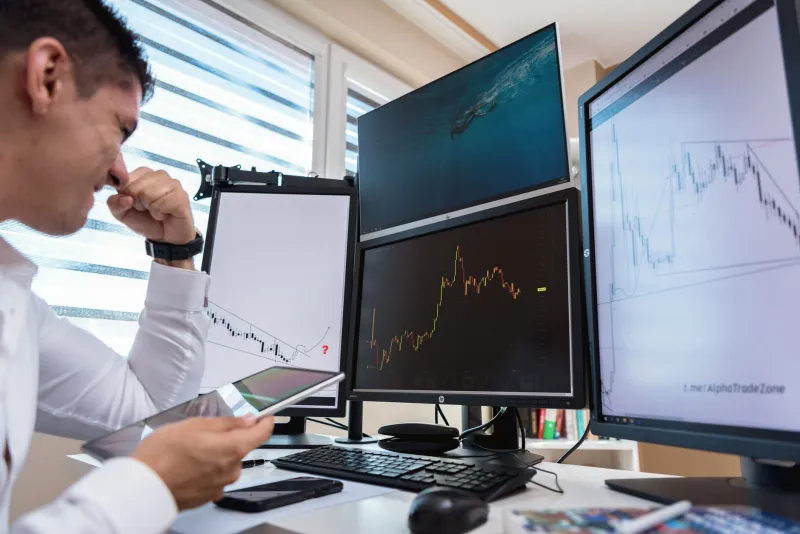
Every trader has experienced it. You watch a setup develop with textbook precision, enter your order at what appears to be a clean level, and then watch the fill come back three, five, or eight cents away from where you expected. In a calm market, that gap is an annoyance. In a fast-moving intraday session, it is the difference between a winning trade and a losing one — and in some cases, between a controlled loss and a catastrophic one.
This is not bad luck. It is not a glitch. It is the predictable result of a market structure that most retail traders never fully reckon with.
The Quote Is a Promise Nobody Made You
The bid-ask spread displayed on your brokerage platform represents the best available prices at a specific moment in time, sourced from a fragmented network of exchanges, dark pools, and electronic communication networks. What it does not represent is a guaranteed execution price.
Market makers — the firms that sit on the other side of most retail orders — are in the business of managing inventory and capturing spread. They quote prices, yes. But those quotes update in microseconds, and the firms operating them have sophisticated systems designed to detect order flow patterns before those orders are even routed. By the time your market order travels from your brokerage to the execution venue, the quote you acted on may no longer exist.
This is not conspiracy. It is mechanics. And understanding it changes how you approach every single entry and exit you make.
Why Volatility Is Where Slippage Lives
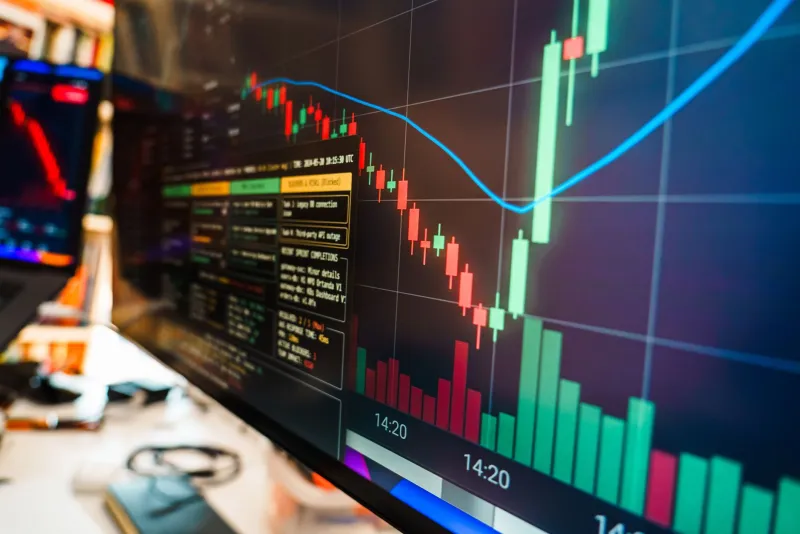
Slippage — the difference between your expected fill price and your actual fill price — is not uniformly distributed across market conditions. It concentrates precisely where you can least afford it: during sharp intraday moves, around major news releases, and in the moments immediately following a technical breakout.
The reason is structural. When volatility spikes, market makers widen their spreads to compensate for the increased risk of holding inventory. Liquidity providers who were quoting tight markets a moment ago step back, either canceling their orders or repricing dramatically. The order book thins out. What looked like deep, liquid conditions — the kind that would absorb your order without a flinch — becomes a sparse collection of offers spread across multiple price levels.
A market order in this environment does not fill at one price. It sweeps through whatever liquidity remains, executing partial fills at progressively worse prices until the full order size is satisfied. This is called walking the book, and it is one of the most expensive things that can happen to a trader who sized their position assuming a clean, single-price fill.
The Limit Order Illusion
Many traders believe limit orders solve the slippage problem. They are partly right — and largely wrong.
A limit order protects you from filling at a price worse than your specified level. That protection, however, comes with a different kind of cost: the risk of non-execution. In a fast market, price can gap through your limit entirely, leaving you watching a move you were positioned to capture with an order that never triggered.
Worse, in certain intraday conditions, a limit order can create a false sense of security that leads to poor position sizing. Traders who believe their downside is capped at a specific level sometimes hold positions through deteriorating conditions, assuming their stop limit will trigger cleanly — only to discover that a gap move has bypassed their price entirely and left them holding a loss far larger than their risk model anticipated.
The limit order is a tool. Like all tools, it performs differently depending on the conditions in which it is used.
How Market Makers Read Your Playbook
Retail order flow is, in aggregate, highly predictable. Breakout traders buy at round numbers and prior highs. Momentum traders pile in after a strong candle close. Stop orders cluster just below obvious support levels. Market makers and high-frequency trading firms have spent years analyzing these patterns, and their systems are calibrated to respond accordingly.
This does not mean every retail order is front-run in a legally actionable sense. It means that when predictable order flow arrives, the market structure adjusts in ways that disadvantage the predictable party. Spreads widen. Liquidity pulls back. The best available price moves away from you at precisely the moment you need it most.
Payment for order flow — the practice by which brokerages route retail orders to specific market makers in exchange for compensation — adds another layer of complexity. The executing firm has visibility into your order before it reaches the broader market. Regulatory frameworks require execution at the National Best Bid and Offer (NBBO), but the NBBO is a floor, not a ceiling on execution quality. Price improvement beyond the NBBO is possible, and whether you receive it depends on factors largely outside your control.
Trading Around the Execution Problem
None of this is reason for paralysis. It is reason for precision.
The first adjustment is cognitive: stop measuring your theoretical trade performance against the midpoint price you saw before you entered. Your real performance is measured from your actual fill. Build that discipline into your post-trade review, and you will quickly develop a calibrated sense of what execution actually costs you across different market conditions and instruments.
The second adjustment is tactical. In volatile conditions, consider using limit orders with a small buffer above your intended entry — enough to increase the probability of execution without surrendering the entire spread. This approach sacrifices a small amount of theoretical edge in exchange for a higher probability of actually participating in the move.
Third, respect the relationship between liquidity and position size. Thinly traded stocks and ETFs with wide spreads require smaller position sizes, not because the setup is worse, but because the execution cost is higher. A trade that looks attractive on a percentage basis may be marginal or negative once realistic slippage is priced in.
Finally, time your entries with execution quality in mind. The first and last fifteen minutes of the regular trading session are historically the most volatile and least liquid periods of the day. Entering large positions during these windows means accepting the worst execution conditions the market offers. For traders who are not specifically exploiting open or close dynamics, waiting for conditions to stabilize is often the more rational choice.
What the Screen Doesn't Show You
The quote on your screen is a starting point for analysis, not a contract of execution. The distance between those two things — between the price you see and the price you receive — is where a meaningful portion of retail trading losses quietly accumulate, hidden inside individual trades that look like near-misses but are actually the predictable result of ignoring execution mechanics.
Mastering a strategy is only half the work. Mastering the conditions under which that strategy reaches the market is the other half — and it is the half that separates traders who understand their edge from those who only think they do.