Paying the Chop Tax: How Sideways Markets Drain Disciplined Traders Who Are Technically Correct
There is a particular frustration reserved for traders who get the direction right, get stopped out anyway, and then watch the original thesis unfold exactly as anticipated—without them. This experience is not random. It is the predictable result of entering a market that is not yet ready to move, and it carries a real financial cost that accumulates over time. In trading circles, this cost is sometimes called the volatility tax. A more precise term might be the chop tax: the systematic extraction of capital from participants who are correct in their analysis but wrong in their timing.
Understanding why this happens—and how to reduce exposure to it—requires looking beyond simple price action into the mechanics of how markets behave during consolidation phases.
What Choppy Markets Actually Are
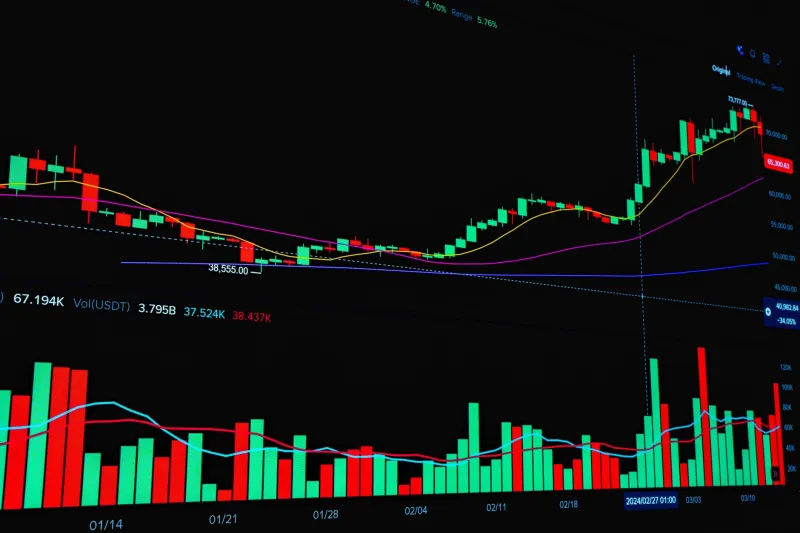
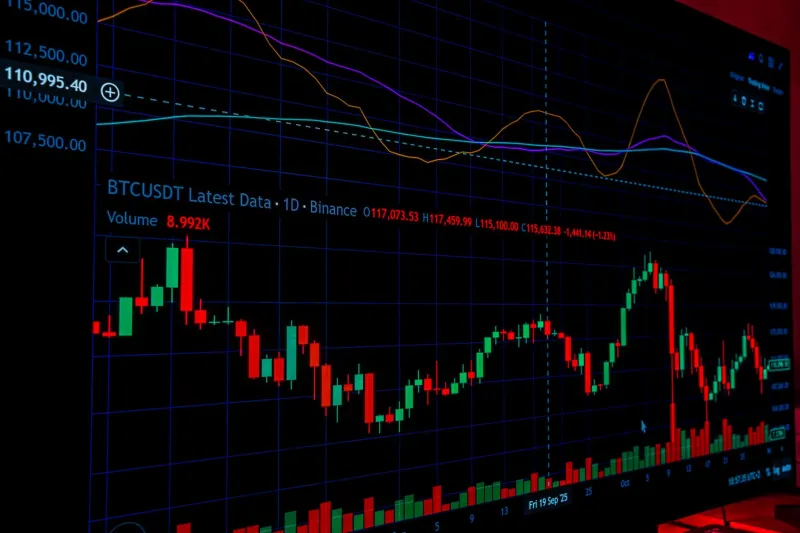
A trending market has a clear directional bias. Buyers or sellers are in control, and price makes consistent progress in one direction with manageable pullbacks. A choppy market, by contrast, is one where neither side has established dominance. Price oscillates within a range, breaking above resistance only to fail, breaking below support only to recover. Volume is often inconsistent. Momentum indicators generate conflicting signals.
These conditions are not rare anomalies. Studies of equity markets suggest that trending conditions account for a minority of overall trading time. The majority of sessions—particularly in individual stocks and sector ETFs—are spent in some form of consolidation. A trader who enters every apparent breakout will spend most of their time fighting noise rather than capturing directional moves.
The structural problem is this: during consolidation, the market is essentially a mechanism for redistributing capital from impatient participants to patient ones. Every false breakout above resistance transfers money from late buyers to the sellers who faded the move. Every breakdown below support that reverses extracts capital from short sellers who entered too early.
The Mechanics of the Chop Tax
The chop tax operates through several distinct channels, each of which is worth understanding independently.
Bid-Ask Spread Erosion
In a fast-trending market, the bid-ask spread is a minor inconvenience. A stock moving three percent in a session easily absorbs a five-cent spread. In a choppy market where price oscillates within a one-percent range, that same spread represents a meaningful portion of the available profit. A trader entering and exiting multiple times within a tight range pays the spread on every transaction. Over the course of a week of consolidation, these costs add up to a measurable drag on performance even before accounting for commissions.
Adverse Selection
This is the more insidious mechanism. When a trader places a market order or a marketable limit order, they are transacting against counterparties who have chosen to be on the other side. During choppy conditions, the counterparties most likely to take the other side of a breakout trade are sophisticated participants—market makers, algorithms, and institutional desks—who recognize the false breakout pattern and are actively fading it. The retail trader who buys the breakout is frequently buying from someone who has identified the move as a fake.
This dynamic, known as adverse selection, means that in low-conviction, range-bound conditions, the act of trading itself is a negative-expectancy proposition for most participants. The market is, in effect, selecting against aggressive order flow.
Stop-Hunt Volatility
Consolidation phases frequently exhibit what practitioners call stop-hunt behavior. Price probes just beyond obvious technical levels—prior highs, prior lows, round numbers—triggering the stop-loss orders clustered there before reversing. This is not necessarily the result of coordinated manipulation in most cases. It is an emergent property of a market where many participants have placed their stops at the same obvious levels. The resulting liquidity pool attracts price, stops get filled, and the market reverses once that supply or demand is exhausted.
A trader with a sound directional thesis but a stop placed at the obvious level gets taken out precisely because their stop is in the same location as everyone else's.
What the Case Studies Show
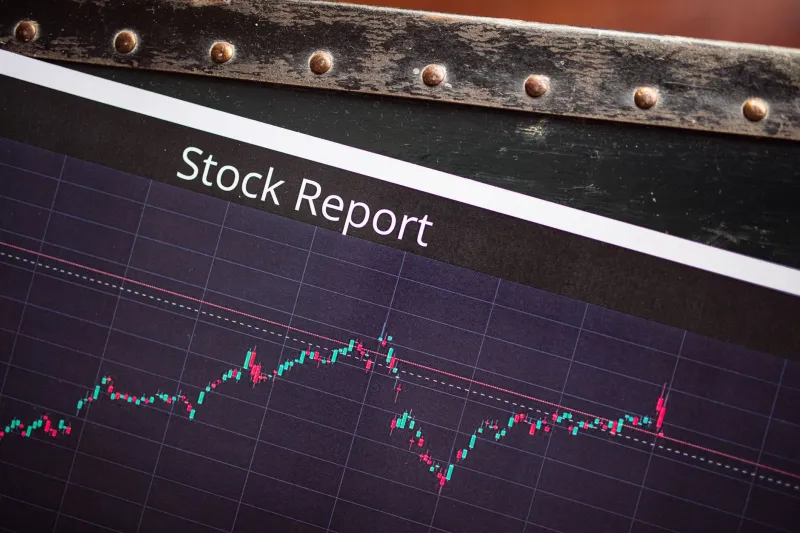
Consider a scenario that plays out repeatedly in momentum stocks following an earnings-driven gap. A company reports strong results, gaps up significantly on opening, and then enters a multi-week consolidation phase as early buyers take profits and new buyers hesitate. The stock oscillates between two clear levels. Every trader who has done the fundamental work knows the company is sound. The question is purely one of timing.
The trader who enters on day three of the consolidation, anticipating a breakout, gets stopped out on day five when price dips below the range low. They re-enter on day eight when price recovers. They get stopped again on day twelve. By the time the genuine breakout occurs on day nineteen, they have paid the spread four times, absorbed two stop-losses, and are psychologically exhausted. The trader who waited for confirmation of the breakout—who demanded that price close above resistance on volume before committing capital—enters once and captures the move cleanly.
The directional analysis was identical. The outcome was not.
How Sophisticated Traders Reduce Chop Exposure
Experienced operators approach consolidation phases with a fundamentally different posture than developing traders. Rather than attempting to predict when the range will resolve, they focus on the conditions that make a resolution high-probability.
Waiting for Volatility Contraction
Before a significant directional move, price action often compresses into an increasingly narrow range. Bollinger Bands tighten. Average True Range declines. This contraction signals that the market is coiling, and that a breakout—when it comes—is more likely to be genuine. Entering during the contraction rather than at the first sign of expansion reduces the number of false signals a trader encounters.
Requiring Volume Confirmation
A breakout on below-average volume is a warning, not a signal. Genuine breakouts from consolidation are typically accompanied by a meaningful expansion in volume, reflecting broad participation rather than a probe by a thin order flow. Requiring this confirmation before entry eliminates a large percentage of false breakouts.
Adjusting Position Sizing
Some traders choose to maintain a reduced position during consolidation, accepting that they may miss some of the initial move in exchange for lower exposure to whipsaw. This approach acknowledges the reality that choppy markets impose costs and responds by limiting the capital at risk during the most punishing phase.
Using Options to Define Risk
In situations where a trader has high conviction about direction but uncertainty about timing, options structures can allow participation in the eventual move while capping the losses incurred during prolonged consolidation. A long call with a defined expiration imposes discipline around timing in a way that a stock position does not.
The Discipline of Doing Nothing
Perhaps the most counterintuitive lesson in navigating choppy markets is that inaction is itself a strategy. The chop tax is only paid by traders who are in the market during consolidation. A trader sitting in cash during a two-week range-bound phase pays nothing. They preserve capital, preserve psychological bandwidth, and enter the eventual trend with fresh perspective and full position-sizing capacity.
This requires a tolerance for the discomfort of watching a stock consolidate without participating—a discomfort that most developing traders find genuinely difficult to manage. The urge to be involved, to not miss the move, drives early entries that result in exactly the losses they were designed to prevent.
The most expensive trades in a choppy market are often the ones taken simply because the trader felt compelled to act. Recognizing that compulsion, and resisting it, is where the real edge in navigating consolidation phases is found.