Screen Time Is Not Edge: The Hidden Tax of a Busy Trading Day
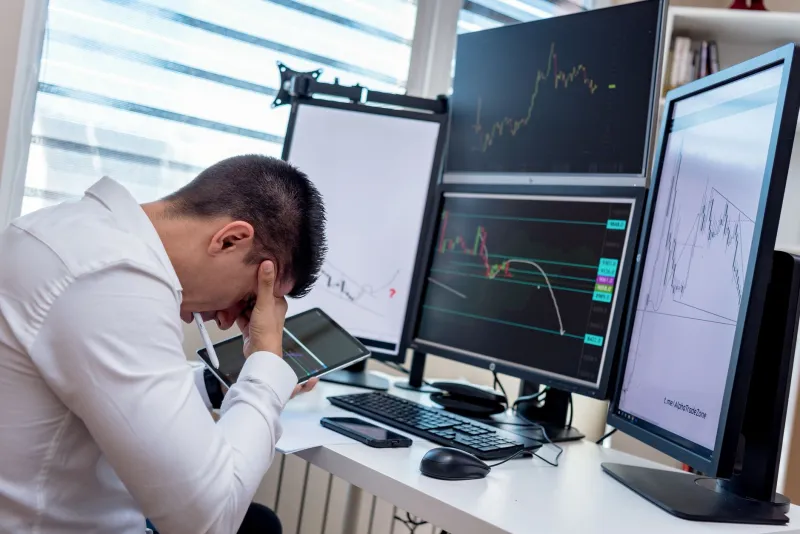
Trading has a peculiar relationship with effort. In most professions, more hours and more activity tend to correlate with more output. In markets, the relationship is far less reliable. A trader can spend eight hours in front of a screen, execute two dozen orders, and finish the day with a smaller edge than someone who reviewed a plan, placed one carefully sized trade, and stepped away. That is the overtrading trap: the feeling of progress without the substance of it.
The Productivity Illusion
Screen time is easy to measure. Edge is not. A busy trader can point to scans run, charts marked, and orders entered. None of those activities prove that a strategy has positive expectancy. They prove only that the trader was active.
The psychological reward is real. Monitoring a position, adjusting a stop, or taking a second look at a candle creates a sense of control. In a probabilistic activity, control is scarce. Activity becomes a substitute for certainty. The result is a feedback loop: the more uncertain the market feels, the more the trader wants to do something, and the more trades are manufactured to satisfy that impulse.
Every Extra Trade Has a Cost Stack
Even in an era of zero-commission retail brokerage, execution is not free. Every order crosses a spread, and every market order can incur slippage. Fast markets widen the gap between the price on the screen and the price on the fill. Taxes treat short-term gains less favorably than long-term gains. Attention is finite, and every additional position consumes the mental capital needed to manage the rest.
The arithmetic matters because most trading edges are thin. A setup that looks profitable on a bar chart can become marginal after realistic costs. If a strategy captures five basis points of edge per trade but pays three basis points in spread and slippage, the net result is fragile. Increase trade frequency and the cost stack compounds faster than the edge does. The market does not care that the commission line reads zero.
Signal Dilution
A trading plan usually identifies a small number of high-quality conditions. Overtrading turns those conditions into a suggestion. The first trade of the day may meet every criterion. The fifth trade may meet most of them. The tenth may be a reaction to boredom, a desire to recover a loss, or a fear of missing a move that has already begun.
This is signal dilution. The marginal trade is not simply another opportunity; it is a lower-quality opportunity that competes for the same capital and attention. In US equities, where thousands of symbols compete for screen space, the temptation to find something is nearly constant. But a scanner can always produce a chart that looks interesting. Interesting is not the same as actionable.
The Psychology of Doing Something
Action bias is well documented in behavioral finance. People prefer to take some action rather than wait, even when waiting is statistically superior. Regret aversion makes it painful to sit flat while a stock moves without you. Boredom makes a quiet tape feel like a personal challenge.
The disciplined countermeasure is not passivity. It is deliberate selectivity. A no-trade day is not a failure of effort; it is a decision that the available setups do not justify risk. The trader who can articulate why a setup qualifies, and why others do not, has a real process. The trader who cannot stop clicking has a habit.
Practical Diagnostics
The first step is measurement. Review the last twenty trading days and separate trades by setup grade. Calculate expectancy, average cost per trade, and average holding period. If the lowest-grade trades are dragging down the total, the problem is not the market. It is the threshold for action.
Second, impose a trade budget. A maximum number of executions per day is not arbitrary; it forces prioritization. Third, require a written thesis before entry. If the reason for the trade cannot be stated in two sentences, it is probably an impulse. Fourth, track the trades you skipped. A shadow portfolio of passed setups can reveal whether selectivity is helping or merely avoiding.
Finally, separate screen time from decision time. Research, review, and planning are valuable. Staring at a live chart after the plan is set is usually not. The goal is not to be busy. It is to be available for the few moments when the edge is real.
The overtrading trap is seductive because it looks like work. But markets pay for risk taken with an edge, not for motion. Doing less, with more intention, is often the harder discipline and the better strategy.